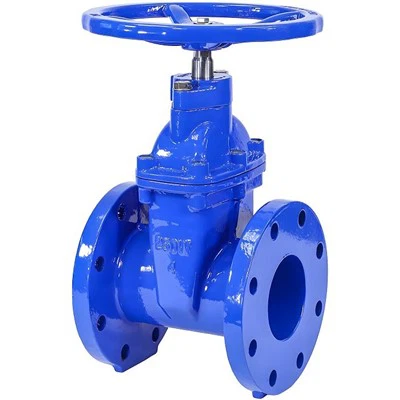
If you’ve ever stared at a messy industrial piping schematic and wondered how every component keeps flow safe, consistent, and under control, you’ve probably passed a globe valve. As a globe valve supplier, I get asked this question all the time: how do you know if a globe valve is up to par? It’s not just a “does it turn easily” check—there’s a whole set of inspection standards that keep these workhorses (think of them as the traffic cops of fluid systems) from leaking, failing, or causing costly shutdowns. Let’s break this down like we do with every valve that leaves our warehouse, no stuffy jargon, just the real stuff that matters for factories, refineries, and water treatment plants. Globe Valve
First off, let’s get one thing straight: inspection standards aren’t made up. They’re developed over decades by people who’ve spent years troubleshooting valve failures, measuring leaks, and figuring out what breaks when things go wrong. There are two main sets everyone in the valve game relies on: the American Petroleum Institute (API) standards, which are a go-to for oil, gas, and chemical industries, and the American Society of Mechanical Engineers (ASME) standards, which cover everything from power plants to municipal water systems. For our part, we follow both, because a globe valve for a refinery can’t cut the same corners as one for a small water treatment loop.
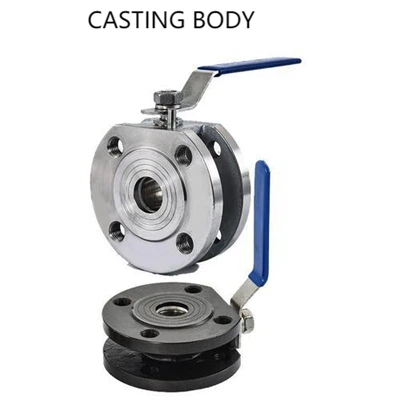
Let’s start with the most basic, non-negotiable check: visual and dimensional inspection. When a globe valve arrives at a job site (or leaves ours), the first thing our quality team does is run a visual check. We’re looking for obvious red flags: cracks in the cast body, sharp burrs on the stem, a finish that’s uneven (those can be signs of a bad casting process, which leads to weak points later). But it’s not just looks. Dimensional inspection is critical because a valve that’s the wrong size won’t seal right, no matter how well it’s built. We measure every critical part: the diameter of the inlet and outlet ports to make sure they match the piping specs, the length of the stem, the distance between the flanges (those are the flat rings that bolt the valve to the pipe) to ensure a tight fit. Even a 1/16-inch mistake here can throw off the entire alignment. I’ve seen this happen once early in my career—we sent a valve that was half an inch too short, and the contractor had to take the whole piping system apart to fix it. That’s the kind of mistake we don’t make now, which is why every valve leaves our shop with a dimensional tag that’s signed off by our lead inspector.
Next up, the pressure test—this is make-or-break. A globe valve’s job is to stop flow, so if it leaks when you’re cranking down on it, it’s useless. There are two main pressure tests: the shell test and the seat test. The shell test checks the main body of the valve, which has to hold back whatever pressure the system throws at it—whether that’s 100 PSI for a water system or 1500 PSI for a chemical pipeline. Here’s how we do it: we close the valve, plug the ports, fill the body with water (or air for special gas applications), then pump it up to a pressure that’s 1.5 times the rated working pressure (API calls this “hydrostatic test pressure”). We hold it there for at least 10 minutes, no leaks, no drops in pressure, and no visible deformations. If it bulges or leaks, that’s a fail—simple as that.
Then the seat test, which checks the part that actually stops flow: the disc and the seat ring inside the valve. For this one, we open the valve just a little, so the disc is pressed firmly against the seat, then apply pressure to the downstream side (the side flow would go to when the valve is closed). We hold that for a few minutes, then check for leakage. For most industrial globe valves, the allowed leakage here is super low—API 607, a standard for fire-safe valves, says you can’t have more than a few drops per minute, even when you’re dealing with volatile materials. I remember a customer who tested a valve we built for a refinery, and they came back saying there was a tiny leak at the seat. We brought it back, took it apart, and found a tiny piece of metal shavings stuck between the disc and seat—something the visual test missed, but the seat test caught. That’s why those pressure tests are non-negotiable; they catch things that look fine but can cause big problems later.
Don’t forget about the stem and packing, either. The stem is the long rod that you turn (or that the actuator turns, in automated systems) to open and close the valve. We check for straightness here—if the stem is bent, it won’t align properly with the seat, leading to leaks, and it will wear out the packing (the material that seals the stem where it comes out of the valve body). The packing is another common failure point. For globe valves, the packing is usually made of graphite or PTFE, and we check that it’s installed correctly—enough wraps, not too tight (which would wear the stem) and not too loose (which would leak). We also test the stem’s operation: it should open and close smoothly, no sticking, no grinding. A good globe valve should last thousands of opening/closing cycles without needing to replace the packing, which is why that function test is part of the inspection process too.
For valves that have actuators (the motor or handwheel that moves the stem), there’s extra inspection. We test the actuator’s torque—how much force it takes to turn the valve. If the torque is too low, the valve won’t seal tight; too high, and you’ll break the stem or actuator. We also test the limit switches that tell the operator when the valve is fully open or closed—those are critical for automated systems, because if the switch is off, you might think the valve is closed when it’s not, leading to a huge spill.
Now, let’s talk about industry-specific standards, because not all globe valves are the same. A globe valve for a water treatment plant might follow ASME B16.34, which covers valves for general service. For oil and gas, API 600 is the standard for steel gate and globe valves, and API 602 covers smaller valves for high-pressure applications. For valves that handle fire hazards (like oil pipelines), API 607 is required to make sure the valve doesn’t leak if there’s a fire, which is why we test those valves for fire resistance as part of the inspection.
One thing I always tell customers: inspection doesn’t stop when the valve leaves our warehouse. There’s also in-service inspection, which is what happens when the valve is installed and working. Things like checking for leaks during routine maintenance, testing the stem’s operation, and checking the pressure drop across the valve to make sure it’s not wearing out. But the key point as a supplier is that the pre-installation inspection should catch all the defects before the valve even gets to the site. That’s why every valve we ship comes with a test certificate, detailing all the inspections we did, the pressure test results, dimensional checks, and material specs.
I’ve been selling globe valves for over 15 years, and the number one mistake I see is contractors skipping or cutting corners on inspection. A few years back, we had a customer who bought a globe valve from a supplier that didn’t do proper pressure tests. When they installed it on a high-pressure chemical line, the body cracked during operation, causing a shutdown that cost them millions. We don’t do that—every valve that comes out of our facility goes through a full inspection, not just a quick check.
So if you’re in the market for a globe valve, don’t just ask for the price. Ask what inspection standards they follow, what tests they perform, and if they can provide a test certificate. As a globe valve supplier, our job isn’t just to sell you a valve—it’s to make sure it works when you need it, and that means every step of inspection is done right.
If you’re working on a project that needs reliable globe valves—whether for a refinery, power plant, water treatment facility, or industrial piping system—reach out to us to discuss your requirements. We can walk you through the inspection process for your specific application, provide test certificates, and make sure you get a valve that meets all the necessary standards.
Check Valve References:
API Standard 600, Steel Gate Valves, Flanged and Butt-Welding Ends, for Petroleum Refinery Service, 23rd Edition, American Petroleum Institute, 2020.
API Standard 602, Compact Steel Gate Valves for Petroleum and Natural Gas Industries, 9th Edition, American Petroleum Institute, 2019.
ASME B16.34, Valves—Flanged, Threaded, and Welding End, American Society of Mechanical Engineers, 2021.
ASME B1.20.1, Pipe Threads, General Purpose (Inch), American Society of Mechanical Engineers, 2013.
Wuxi PYNOS Flow-tech Co., Ltd.
As one of the leading globe valve manufacturers and suppliers in China, we offer a wide range of products with superior quality. We warmly welcome you to buy high quality globe valve made in China here from our factory. We also accept customized orders.
Address: Sales Center: 7th Floor, No.19 Qingyuan RD, Wuxi City, Jiangsu Prov., China
E-mail: Info@pynosvalve.com
WebSite: https://www.pynosvalves.com/
