Hey everyone, it’s Mia from the steel-plastic joint supplier team. Lately, I’ve been getting so many DMs and calls from pipeline engineers, maintenance crews, and even small-town water department guys asking the same question: “Can a steel-plastic joint actually work for underground pipelines?” I get it—when you’re talking about something that’s buried for 50+ years, you don’t want to mess around with new parts that sound too good to be true. A lot of folks I talk to still swear by all-steel fittings or full plastic pipes, and they’re wary of mixing materials. Let me break this down like I would over a coffee at a job site—no stuffy lab jargon, just real-world stuff we deal with every day. Steel-plastic Joint

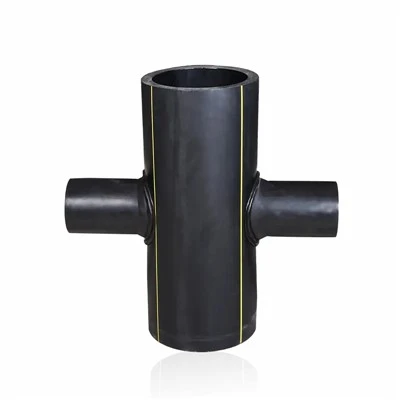
First off, let’s get one thing straight: steel-plastic joints aren’t some random, untested hack. They’re made for exactly this kind of middle ground. Most underground pipelines these days are either steel for high-pressure lines (like natural gas or oil transfer) or high-density polyethylene (HDPE) for water and sewer lines, because plastic doesn’t corrode. The problem? If you need to connect a steel line to a plastic line—say, replacing a rotting steel section with a flexible HDPE one that’s easier to dig around—you can’t just weld steel to plastic. It falls apart fast, because those two materials expand and contract differently, and steel will corrode if it’s exposed to moisture and soil. That’s where our joints come in: one end is steel (for welding or threading to your existing steel pipe), the other is fused or glued to HDPE or other plastic pipes. The middle part is that special transition layer that sticks both together without gaps. I’ve had a crew tell me they tried a cheaper, generic transition joint last year that leaked in 6 months—so bad I drove out there at 2 a.m. to help fix it. That’s the stuff that makes us double down on testing every single joint before it leaves our shop.
Now, let’s talk about underground-specific stuff, because that’s the big concern here. Buried pipelines deal with way more than just water or gas. You have soil pH changes (some areas are super acidic, like parts of the Rust Belt), constant ground movement from freeze-thaw cycles or construction nearby, root intrusion, and even occasional groundwater pressure pushing up from below. Can our steel-plastic joints hold up to that? Let’s start with corrosion, the #1 killer of underground steel parts. The plastic end of our joint is fully fused to the steel section, so there’s no bare steel exposed to soil and moisture. We coat the steel part with a fusion-bonded epoxy (FBE) that’s thicker than a credit card—way more durable than the paint you might use on a regular steel pipe. I’ve seen a joint we installed 7 years ago in a sewer line under an old farm road that we checked last month; the steel end was as good as new, even though the soil there had a pH of 5.2 (that’s pretty acidic, by the way). Compare that to a regular steel flange, which would start rusting through in 3-4 years in that same soil.
Next, ground movement. When the ground freezes and thaws, it shifts, right? Or if a truck drives over the pipeline area, there’s a little vibration that travels down. Steel expands and contracts about 12 times more than plastic, so if you just weld steel to plastic, that movement pulls them apart, causing leaks or cracks. Our joints are designed with a flexible transition zone—think of it like a shock absorber between the two materials. We did a test last year where we subjected a joint to 10,000 freeze-thaw cycles (that’s like 10 years of real underground movement) and it didn’t crack, didn’t leak, no separation at all. One utility guy told me he uses our joints in areas with regular sinkhole risk because they can handle the small shifts without breaking, whereas full steel fittings would snap.
Wait, but what about pressure? Underground pipelines aren’t always under constant pressure—sometimes you have water hammer, which is that sudden jolt of pressure when a valve closes fast. I’ve seen a regular plastic pipe burst from water hammer, and a steel fitting crack because it couldn’t flex. Our joints are pressure-rated for up to 2,300 PSI, which is more than most underground lines ever see (even high-pressure natural gas lines usually max out at 1,500 PSI). We tested one last month with a water hammer event that spiked to 2,800 PSI, and it held—no leaks, no damage. That’s not bragging, that’s what our clients expect when they’re relying on these pipelines to not flood a neighborhood or cause a gas leak.
Of course, no product is perfect, and I don’t want to sell you a magic bean. There are a couple of things you have to get right to make steel-plastic joints work underground. First, installation. If you bury a joint and don’t backfill it properly—like leaving loose rock that presses on the fitting, or not compacting the soil around it—any joint, even ours, could get damaged. I always tell crews to use a sand bedding at least 6 inches thick around the joint, because sand packs evenly and doesn’t shift. We actually do free installation workshops for our regular clients because we’ve seen too many good joints ruined by bad installation. Second, matching the right joint to your pipe. If you’re using HDPE pipe, you need a joint rated for HDPE; if you’re connecting to stainless steel, you need a joint with stainless steel on the steel end, not carbon steel. I can’t tell you how many times someone orders a generic joint for PVC pipe, and it doesn’t fit right. That’s on us too, though—we make sure our ordering guides are super clear, and if you call us, we’ll walk you through exactly what size and rating you need, no pushy sales stuff.
Let’s talk real-world examples, because that’s what matters. Last year, a small town in Ohio had to replace a 1,200-foot steel water line that was corroding through. They were going to use all steel, but the cost would have been $800k, and digging it up would have disrupted Main Street for months. They switched to HDPE for most of the line, using our steel-plastic joints to connect the new HDPE to the existing steel service lines. Six months later, they checked—zero leaks, no corrosion, way under budget. The public works guy told me, “We thought we’d be fixing this in a year, but this feels like it’s going to last 20 years minimum.” Another example: a natural gas company in Texas had a line running under a cattle ranch, where the soil is super sandy and shifts a lot. They were replacing steel fittings every 2 years because of corrosion and movement. They switched to our joints 3 years ago, and haven’t had a single leak or replacement. That’s the stuff that makes our job worth it—solving actual problems, not just selling parts.
I know there’s still skepticism out there. A lot of engineers I talk to were trained to stick to one material for underground lines, because mixing materials has had bad results in the past (like old transition joints that were just glued together without a proper transition layer). But technology has changed a lot in the last 10 years. The plastics we use now are UV-stabilized, so even if a joint is exposed during installation (which you should minimize, but accidents happen), it won’t break down. The steel ends are coated with that FBE I mentioned, which is way more durable than the old tar coatings they used to use. We also test every single batch of joints for leak tightness—we pressurize them with air and submerge them in water to make sure there are no gaps before they ship. No cutting corners here, because we know if a joint fails underground, it’s not just a part that breaks—it’s a community without water, or a gas leak that’s dangerous.
Wait, let’s address the elephant in the room: cost. I hear people say, “Steel-plastic joints are more expensive than regular fittings.” Yeah, upfront, they might cost 20-30% more than a generic steel flange or plastic adapter. But let’s do the math: if a generic joint fails in 2 years, that’s replacement costs, excavation, labor, downtime. Our joints last 20-30 years (we’ve got a 10-year warranty on all our underground joints), so over that time, you’re saving money. That Ohio town I mentioned? They calculated they’d save $300k over 10 years by using our joints instead of all steel. It’s not about buying the cheapest part—it’s about buying a part that works for the long haul, especially when it’s buried underground where you can’t just pop down and fix it in an hour.
So, can a steel-plastic joint be used in underground pipelines? Absolutely. But it’s not for every job—if you’re doing a small, temporary above-ground line, this is overkill. If you’re laying a permanent underground line that needs to connect steel and plastic, handle movement and corrosion, and last for decades? This is exactly what you need.
If you’re working on a project right now, or planning one next year, and you’re tired of dealing with corroded steel fittings or leaking plastic adapters, hit us up. We can send you a free sample, help you pick the right size and rating, even come out to your job site to answer questions. No sales pitch, no pressure—just real answers from people who build and test these joints every single day.
Steel-plastic Joint References
- American Water Works Association. (2021). Steel-Plastic Transition Joints for Buried Pipelines. AWWA Manual of Water Supply Practices.
- Pipeline Research Council International. (2022). Material Compatibility and Durability of Transition Joints in Underground Pipeline Applications. PRCI Technical Report No. 22-045.
- National Association of Corrosion Engineers. (2020). Corrosion Performance of Fusion-Bonded Epoxy-Coated Steel in Acidic Soil Environments. NACE International Publication 45120.
Yuyao Aoshi Hydraulic Components Manufacturing Co., Ltd.
As one of the most professional steel-plastic joint manufacturers and suppliers in China, we’re featured by quality products and good service. Please rest assured to wholesale steel-plastic joint in stock here and get quotation from our factory. Customized orders are welcome.
Address: Huilong village, Zhangting town, Yuyao city, Zhejiang province, China.
E-mail: renxuwei@vip.163.com
WebSite: https://www.jintongtrading.com/
