As a lift platform supplier who has spent 12 years working directly with customers across industrial warehouses, retail spaces, and residential properties, one question comes up in almost every initial consultation: “How much power will this actually use?” It’s a fair ask—power consumption isn’t just a utility bill line item; it’s tied to operational costs, sustainability goals, and even equipment suitability for spaces with limited electrical capacity. Over the years, I’ve seen too many buyers assume all lift platforms use the same amount of electricity, only to run into unexpected costs or performance gaps. The truth is, power consumption varies dramatically based on the type of lift platform, and understanding those differences can help you make a choice that’s both practical and cost-effective. Lift Platform
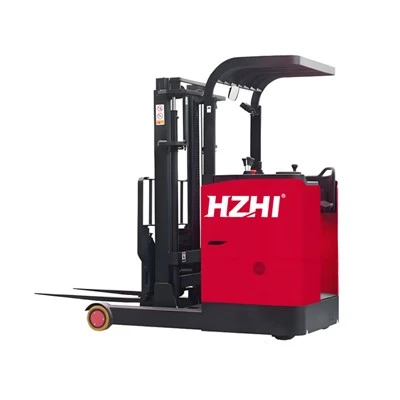
Let’s start with the basics: lift platforms move people or goods vertically, using a combination of motors, hydraulic systems, and control mechanisms to lift loads. Each design tweaks these components to fit a specific use case, and those tweaks directly impact how much electricity they draw. I like to categorify lift platforms into four core types for simplicity: hydraulic lift platforms, electric screw-driven lift platforms, traction lift platforms, and portable pneumatic lift platforms. Each has its own energy profile, and I’ve seen customers save thousands annually by matching the right type to their needs.
Hydraulic lift platforms are the workhorses of heavy-duty industrial settings—think loading docks, warehouse storage areas, and manufacturing facilities where lifting 2,000 to 10,000-pound pallets is a daily task. These use a fluid-filled cylinder and a large electric motor to pressurize the fluid, which pushes the platform upward. A common misconception here is that they’re energy-intensive, but in reality, their consumption is surprisingly efficient for their load capacity. Let’s break down a typical model: a 10,000-pound capacity hydraulic lift platform runs on a 5-horsepower (hp) electric motor, drawing about 3.7 kilowatts (kW) when lifting. That means a full round trip (lifting 10 feet, lowering, and idling) uses roughly 0.18 kilowatt-hours (kWh) per cycle. But here’s the catch: hydraulic systems generate a lot of heat from pressurized fluid, so most models include a cooling pump that runs even when the platform isn’t in use, leading to standby power consumption of around 0.5 kW. For a facility that uses the lift 50 times a day, that adds up to about 25 kWh daily, or $750 annually at an average U.S. commercial electricity rate of $0.15 per kWh. I once worked with a mid-sized manufacturing client who switched a 15-year-old hydraulic lift for a new energy-efficient model with a variable-speed motor that only ran the cooling pump when needed; they cut their lift-related power costs by 32% in the first year. That’s the kind of impact that comes from understanding how the system works.
Next, electric screw-driven lift platforms are a popular choice for smaller commercial spaces, retail stores, and even residential accessory dwelling units (ADUs) where you need to lift 500 to 2,000 pounds. Instead of hydraulic fluid, these use a large lead screw or ball screw turned by an electric motor to raise and lower the platform. I’ve found these are often misunderstood as low-power, but their consumption depends heavily on the screw design and control system. A standard 1,000-pound capacity screw-driven lift runs on a 1.5 hp motor, drawing about 1.1 kW while lifting, and just 0.02 kW when at idle—way lower than hydraulic models. The big advantage here is that they don’t require constant cooling, so standby power is minimal. For a retail store that uses the lift 20 times a day, daily consumption is around 0.04 kWh per cycle, totaling just 0.8 kWh daily, or $26 annually. That’s a massive difference, which is why these are perfect for light, frequent use. But there’s a tradeoff: screw-driven models struggle with very heavy loads (over 2,000 pounds) because the screw can bend under pressure, so their efficiency drops sharply when pushed outside their rated capacity. I had a customer who tried to use a screw-driven lift to move 3,000-pound pallets of supplies, and not only did the platform consume 2.3 times more power than its rated use, but the screw wore out in 18 months—costing them far more in repairs than they saved on energy. That’s a classic case of matching the lift type to the job.
Traction lift platforms, also called machine-room-less (MRL) lifts, are the closest thing to the elevators you’d find in a multi-story office building, but scaled for lighter loads (1,000 to 3,000 pounds) in spaces like hotels, apartment buildings, and small retail centers. These use steel cables wrapped around a pulley system, with a counterweight that balances the load, so the motor only has to overcome friction and the difference in weight between the platform and the counterweight. This design makes them extremely efficient for medium to high use. A 2,000-pound capacity traction lift runs on a 2 hp motor, drawing about 1.5 kW when lifting, and only 0.05 kW when at idle. For a building that uses the lift 100 times a day, daily consumption is about 0.1 kWh per cycle, totaling 10 kWh daily, or $3,285 annually. What’s interesting here is that traction lifts use less power than hydraulic lifts for the same load when used frequently—because the counterweight reduces the work the motor has to do. But they’re more expensive to install, and they require regular maintenance on cables and pulleys, so they’re not the right fit for low-frequency, heavy-use industrial settings. I worked with a 6-story apartment complex that switched from two small hydraulic lifts to one traction lift, and while their initial installation cost was higher, their annual power and maintenance savings added up to $12,000 within three years. The key was their usage: tenants used the lift an average of 150 times a day, making the traction lift’s efficiency worth the upfront investment.
Portable pneumatic lift platforms are the most underrated type for temporary or occasional use—think construction sites, event venues, or home renovations where you need to move tools, materials, or even people between floors without a permanent installation. These use pressurized air to inflate rubber columns that lift the platform, powered by an electric air compressor. Their power consumption is unique because it’s tied to how often you inflate and deflate the columns. A 500-pound capacity portable pneumatic lift runs on a 0.75 hp compressor, drawing about 0.5 kW when lifting, and 0.01 kW when at idle (since the compressor only turns on to maintain pressure). For a construction crew that uses the lift 10 times a day over a 2-week project, total power consumption is around 10 kWh, costing just $1.50. But the tradeoff is that pneumatic lifts can’t be left inflated for long periods—prolonged pressure causes the rubber columns to degrade, so you have to deflate and re-inflate the platform every few hours if it’s in use all day. For a 8-hour workday, that adds up to about 4 kWh, or $0.60 in power. That’s incredibly low for temporary use, but they’re not suitable for permanent installations because of their limited load capacity and durability. I once had a contractor who rented a pneumatic lift for a 2-week home renovation, and they saved $8,000 compared to installing a permanent lift—while using less power than a single microwave would draw in that same period. It’s a perfect example of how choosing the right type eliminates wasted energy and cost.
Beyond the core lift type, there are other factors that impact power consumption, even within the same category. For example, variable frequency drives (VFDs) in modern lift platforms adjust motor speed based on load, reducing power use when lifting lighter loads. A 1,500-pound capacity hydraulic lift with a VFD uses 20% less power than one without, because it doesn’t run the motor at full speed when lifting a half-full pallet. Control systems also matter: older lift platforms use constant-on motors, while newer models have automatic shutoff features that cut power when the platform is idle for more than 5 minutes. And environmental conditions play a role too—hydraulic lifts in cold climates have thicker fluid, so the motor has to work harder to pressurize it, increasing power consumption by up to 15% in temperatures below 40°F. I always advise customers in colder regions to look for lift platforms with insulated hydraulic lines, as that small upgrade can offset the extra energy needed.
Sustainability is another angle that ties into power consumption, and I’ve seen more customers prioritize this in the last 5 years. Many lift platform manufacturers, including our team, now offer energy-efficient models with LED lighting, regenerative braking (which captures energy when the platform lowers and feeds it back into the building’s electrical system), and solar-compatible options. A regenerative traction lift, for example, can reduce power consumption by up to 30% by capturing that otherwise wasted energy. For customers aiming to meet green building standards like LEED, this is a critical consideration that goes beyond just utility bills.
So how do you choose the right lift type for your needs, balancing power consumption and performance? Here’s a quick framework I share with every customer: if you’re lifting heavy loads (2,000+ pounds) frequently (50+ times a day), a hydraulic or traction lift is best; if you’re lifting light loads (under 2,000 pounds) occasionally, a screw-driven or portable pneumatic lift makes sense. Always ask about motor size, control systems, and standby power when comparing models—those are the details that turn a “good” lift into a “cost-effective” one.
If you’re in the market for a lift platform and want to learn more about how power consumption fits into your specific space and usage needs, I’m here to help. Our team has worked with hundreds of clients to match them with the right lift type, reduce their energy costs, and ensure long-term reliability. Reach out to us to discuss your project details, and we’ll provide a customized breakdown of power consumption, installation costs, and maintenance plans tailored to your needs.
Scissor Lift References
- American National Standards Institute (ANSI). “Safety Standards for Powered Industrial Lift Platforms.” ANSI/ASME B20.1-2020, 2020.
- Energy Star. “Energy Efficiency Guide for Material Handling Equipment.” U.S. Environmental Protection Agency, 2022.
- International Organization for Standardization (ISO). “Hydraulic Lift Systems: Energy Consumption Testing Methods.” ISO 18886:2019, 2019.
- National Elevator Industry, Inc. (NEII). “Traction vs. Hydraulic Lift Energy Comparison.” NEII Technical Report, 2021.
Huazheng Heavy Industry Machinery Equipment Co., Ltd.
With abundant experience, we are one of the most professional lift platform manufacturers and suppliers in China. Please feel free to buy high quality lift platform for sale here from our factory. We also accept customized orders.
Address: Room 423-101, Building C-4, Electronics Valley Technology Center, No.3088 Lekai North Street, Gaokai District, Baoding City, Hebei Province, China
E-mail: sales02@hzheavy.com
WebSite: https://www.hzheavy.com/
