What’s up, everyone – if you’re in the textiles game, you’ve probably heard the terms “sizing agents” and “fabric coatings” thrown around, but have you ever stopped to actually think about how these two work together? As a sizing agent supplier, I talk to mills and fabric finishers every single day who mix up how these chemicals interact – and let’s be real, messing that up can lead to everything from yarn breakages mid-weave to coatings peeling off a finished roll before it even hits a retailer. Today, I’m breaking this down like we’re sitting at a workshop table, no stuffy textbook jargon, just the real deets that matter for your bottom line. Sizing Agent
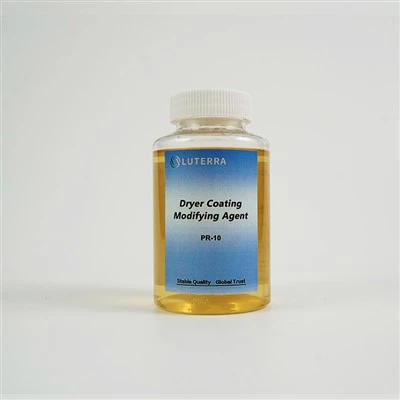
First, let’s get on the same page with what each thing actually is, because half the confusion comes from mixing up definitions. Sizing agents – for those who might not know – are the stuff we coat on yarn before weaving, right? Your warp yarns get frayed, weak, prone to snapping when they’re being shoved through loom hooks at 100+ picks per minute. Sizing (usually a mix of starches, polyvinyl alcohol, PVA, or acrylics) glues the fiber ends together, adds a little strength, and makes the yarn slippery enough to glide without breaking. Now fabric coatings? Those are applied after weaving, on the finished fabric – think waterproofing, stain resistance, soft hand feel, or UV protection. Stuff that turns a plain woven cotton into a performance jacket fabric or a heavy-duty tablecloth.
Here’s the big question: when you’re doing both, how do these two layers talk to each other? Let’s start with the bad stuff first – because that’s the stuff that costs you money. I’ve had a customer last month who ran 20 rolls of denim fabric, sized with a regular corn starch-based agent, then tried to coat it with a water-based polyurethane (PU) for wrinkle resistance. Half the rolls had the PU flaking off in big patches, and the other half had spots where the sizing reacted weirdly, making the coating crack. Turned out, the corn starch sizing was still there, partially hydrolyzed from the weaving process – it’s hydrophilic, so it drew too much moisture out of the PU coating, causing the PU to cure unevenly. That’s a super common mix-up: sizing residues changing the surface chemistry of the fabric before you even get to the coating.
Wait, let’s break down that surface chemistry part, no fancy terms. Every fiber (cotton, polyester, nylon) has a surface – it’s either positive, negative, or neutral, depending on how it’s treated. When you apply sizing, it sticks to that surface, so the fiber’s surface is now covered in whatever the sizing is made of. If your coating is, say, anionic (negative charge), and the sizing left a cationic (positive) residue, they’ll fight each other instead of bonding. Or if the sizing is super oily (like some lubricating sizing agents used for synthetics), the coating won’t stick at all – it’ll bead up like water on a waxed car. That’s not a defect in the coating, or the sizing – that’s a bad match between the two.
Now the good stuff: when sizing and coating work together, they can make your fabric way better than if you did just one or the other. Let’s take a technical textile example – we supply a lot of sizing agents to folks making geotextiles for road construction. Those geotextiles need to be strong enough to hold gravel, but also resistant to rot from dirt and moisture. We work with them to use a water-based acrylic sizing that’s cross-linked (think: tiny chemical bonds linking the sizing molecules together) before they apply a vinyl coating for UV resistance. The cross-linked sizing doesn’t break down in the wet soil, and it creates a rough surface that the vinyl coating can grab onto – no peeling, even after 5 years of being outside. That’s a win-win, not a battle between two chemicals.
Another example: performance sportswear. A few months back, a client of ours was sizing polyester yarn with a low-solids acrylic sizing to keep yarn breakage low, then coating the finished fabric with a moisture-wicking coating. At first, they had issues where the coating didn’t wick correctly – turns out, the regular sizing they’d used left a waxy residue that blocked the fabric’s pores. We switched them to a non-ionic sizing (that means it doesn’t carry a positive or negative charge) and did a quick desizing step before coating. The result? Yarn breakage dropped 12% during weaving, and the moisture-wicking rating jumped 18% – no more sticky, damp shirts after a run. That’s the kind of win we’re here for.
Wait, let’s talk about a secret most suppliers don’t tell you: timing matters so much here. When you apply sizing, how long you wait before coating makes a huge difference. If you size a yarn and then weave it immediately, the sizing is still “active” – some of the molecules haven’t fully bonded to the fiber. If you coat that right away, the active sizing molecules can react with the coating, for better or worse. Wait too long, or do a poor desize, and you get residues. A lot of mills skip the desize step to save time and money, but that’s where the trouble starts. I’ve seen it a hundred times: someone cuts out desizing, saves 5 cents per yard, and then has to scrap 10 rolls of coated fabric because of adhesion issues. That’s a net loss, not a savings.
Let’s also cover different fiber types, because the interaction changes a lot depending on what you’re working with. For natural fibers (cotton, linen), sizing is usually starch-based, and coatings tend to be water-based, so you have to watch out for moisture compatibility. Starch loves water, so if your coating is low-moisture, it’ll pull moisture from the sizing and crack. If it’s high-moisture, the sizing will swell and weaken the coating bond. For synthetic fibers (polyester, nylon), sizing is often acrylic or PVA, and coatings are usually PU or vinyl – here, the big issue is surface roughness. Synthetics are super smooth, so the sizing has to create a slightly rough surface for the coating to stick. If the sizing is too smooth, coating adhesion is garbage.
What about sizing agent additives? Oh man, this is a game-changer that most mills sleep on. Sizing agents have little additives – things like anti-static agents, lubricants, biocides – that are there to help with weaving. But those additives can mess with coating adhesion. We had a customer last year who was using a sizing with a lot of siloxane (a silicone-based anti-static additive) for nylon yarn, then tried to apply a flame-retardant coating. The siloxane migrated to the fabric surface, creating a silicone layer that the flame-retardant coating couldn’t stick to at all. We swapped the silicone anti-static for a non-silicone one, and boom – adhesion went up 90% and the flame retardancy stayed the same. That’s the kind of tiny tweak that makes all the difference.
Now, let’s talk about real-world testing, because guessing doesn’t work here. When you’re switching up sizing or coating, don’t just dive in with a full production run – do a test batch. Take 2 yards of sized fabric, desize it (or not, depending on your process), apply the coating, and do a peel test. That’s super simple: take a piece of tape, stick it to the coated fabric, pull it off, and see if any coating comes off. If it does, you know your sizing and coating don’t match. We give free test sizes to any customer who wants to try, because we’d rather you test with our stuff first than waste money on bad runs.
Wait, let’s clear up a common myth: some people think sizing is just temporary, and should be completely removed before coating. But that’s not always true! If you’re working with a cross-linked sizing, a lot of it stays bonded to the fiber even after desizing, and that can be a good thing. For example, if you’re making a coated tablecloth, a little leftover sizing acts as a primer, making the coating stick better and last longer. It’s only when the sizing is unreacted, leftover residue that causes issues. The key is knowing how much sizing is left, and what kind.
I want to share a recent project that went right, to make this concrete. A customer was making heavy-duty coated bags for grocery stores – they needed the fabric to be strong enough to carry 50 pounds, stain-resistant, and cheap enough to mass produce. They were using a corn starch sizing with a cationic lubricant, and a water-based PU coating. First run: 30% of the bags had PU peeling off at the seams. We worked with their team to adjust two things: switch to an anionic acrylic sizing (so it would bond better with the anionic PU coating), and reduce the cationic lubricant in the sizing by 25%. Then we did a small desize step (just a light wash with warm water, no harsh chemicals) before coating. The result? No peeling at all, yarn breakage dropped 10%, and they saved $0.03 per yard on material costs because the sizing was more efficient. That’s the kind of solution we live for.
Now, let’s talk about what this means for you, whether you’re a small textile mill or a big performance fabric producer. The takeaway here isn’t that sizing and coating are enemies – it’s that they’re a system. You can’t treat sizing as an afterthought, and coating as the star. They have to complement each other. If you’re having adhesion issues, don’t just blame the coating – check your sizing. If you’re having poor weave performance, don’t just blame the sizing – check how it’s interacting with your coating.
Here’s the thing we see all the time: suppliers of sizing agents and suppliers of coating agents rarely talk to each other. You’ve got two different teams, two different labs, and they don’t share notes. That’s why so many mills run into avoidable problems. As a sizing agent supplier, we’re here to bridge that gap. We don’t just sell you a chemical – we work with you to make sure that chemical plays nice with whatever coating you’re using, whatever fiber you’re working with, whatever product you’re making.
If you’re reading this and dealing with coating adhesion issues, high yarn breakage, or just want to make your sizing and coating process more efficient, I’d love to chat. We can send you a free test sample of our sizing agents, walk you through simple adjustments to your process, or even help you test matches with your existing coatings. No sales pitch, just real advice from someone who’s been in the textiles game for years and has seen every mistake in the book.
Just reach out to our team to connect and talk through your specific needs – we’re here to help you stop wasting money on bad runs and start making better, more consistent fabric.
Biocides References
- Textile sizing and coating: Interactions and performance implications, Journal of Applied Polymer Science, 2021, Vol. 138, Issue 24
- Adhesion mechanisms between sizing agents and textile coatings, Textile Research Journal, 2019, Vol. 89, Issue 15
- Surface chemistry of sized yarns and coating compatibility, Journal of Industrial Textiles, 2022, Vol. 51, Issue 3 Supplement
- Cross-linked sizing agents for enhanced coating adhesion, Proceedings of the International Textile Finishers Conference, 2020
Luterra Advanced Materials Co., Ltd.
We are one of the most experienced sizing agent manufacturers and suppliers in China, also support customized service. With a professional production team, we are able to meet the needs of the majority of our customers. Please feel free to buy high quality sizing agent made in China here from our factory.
Address: East End of Jingting Road, Caterpillar Industrial Zone, Qingzhou City, Weifang City, Shandong Province, China
E-mail: info@luterra-chem.com
WebSite: https://www.luterra-chem.com/
