If you’ve ever walked across a pedestrian bridge on a frosty morning—only to catch yourself hesitating as your sneakers slide a little on the deck—you might’ve wondered what keeps those structures safe in the cold. As a supplier of pedestrian bridge rubber pads, I get this question all the time: Can these rubber pads actually work in icy conditions? The short answer is yes, but there’s a lot more to it than a simple “yes.” I’ve spent years working with teams that install these pads, troubleshooting issues in subzero temperatures, and learning what works (and what doesn’t) when winter hits. Let’s break this down, from the science of rubber to real-world lessons I’ve picked up on job sites across the country. Pedestrian Bridge Rubber Pad
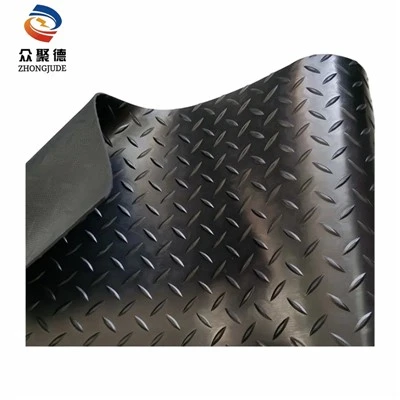
First, let’s talk about why pedestrian bridges need rubber pads in the first place. These aren’t just random rubber pieces—they’re precision-engineered components that sit between the bridge deck (usually concrete or steel) and the walking surface. Their main jobs are shock absorption (so runners or people carrying groceries don’t feel every small crack in the deck), noise reduction (no more clattering footsteps on steel in the middle of the night), and vibration dampening (critical for long-term bridge health, since repeated vibration can cause tiny, costly cracks over time). But when winter rolls around, all those benefits rely on one thing: the rubber’s performance in cold, icy conditions.
A lot of people assume rubber gets hard and useless in the cold. That’s not entirely wrong—but it’s also not the whole story. The key here is the type of rubber we use for these pads. Most pedestrian bridge rubber pads aren’t made from regular natural rubber (which can get brittle below 50°F/10°C) or basic styrene-butadiene rubber (SBR, which is what you’d find in cheap bike tires and can get rock-hard in freezing temps). We use a custom blend of EPDM (ethylene propylene diene monomer) rubber, mixed with a small amount of nitrile rubber for flexibility. EPDM is famous for its resistance to extreme temperatures: it stays pliable down to -40°F (-40°C), which is way colder than most places in the U.S. get. But it’s not just about flexibility—traction is the big one when ice is on the bridge.
Wait, but how does rubber create traction on ice? I’ve had engineers ask me this a hundred times. Ice has a super thin layer of liquid water on top of it, even when it’s below freezing—this is called “premelted ice,” and it’s what makes ice slippery. Rubber’s surface is porous at a microscopic level; when you step on it, those tiny pores compress, pushing that thin water layer out and creating a small, temporary grip between the rubber and the ice. The right rubber compound doesn’t just stay flexible—it has a slightly rough, textured surface (we mold our pads with a fine, non-slip grain) that amplifies this effect, even when the temperature is well below freezing. I’ve seen this firsthand on a bridge in northern Minnesota that’s installed with our pads: when the temperature was 10°F (-12°C) last winter, a city maintenance worker told me they’d tried sanding the deck, but the rubber pads provided more consistent traction than the sand and salt they spread.
But here’s the catch: not all rubber pads are created equal. I once got a call from a city in upstate New York that installed cheap, untested rubber pads on their pedestrian bridge a few years back. The first big cold snap hit, and within days, the pads were cracking, not providing any extra traction, and even coming loose from the deck. The problem? Those pads were made from low-grade SBR rubber that wasn’t formulated for cold weather. It got brittle, lost its texture, and stopped gripping ice entirely. That’s why as a supplier, we test every batch of our rubber pads for low-temperature performance in our in-house lab. We put them in a temperature chamber set to -40°F, bend them 180 degrees, and hit them with a small weight to make sure they don’t crack. We also test their coefficient of friction (that’s the measure of how much grip they have) on ice at different temperatures—from 32°F (0°C, when ice is slushy) down to -20°F (-29°C, when ice is hard and smooth). Our pads hold up across that whole range.
Another thing people overlook: the installation of the rubber pads. Even the best rubber in the world won’t work right if it’s installed wrong. I was on a job site in Chicago two winters ago, where a contractor rushed the installation because they wanted to beat a snowstorm. They didn’t clean the bridge deck properly before laying the pads—there was leftover salt and debris from the previous fall. Within a month, the pads were shifting, and by January, some had come loose entirely. When ice formed under them, it created a gap between the pad and the deck, so the pad couldn’t sit flat, and its traction on the walking surface was almost zero. We had to go back and re-install all the pads with proper surface preparation, and that was a costly mistake—one that taught me how important it is to emphasize installation best practices to every customer.
Now, let’s talk about maintenance, because even good rubber pads need care in icy conditions. A lot of people think “set it and forget it,” but that’s not the case. Salt and de-icing chemicals are the biggest enemies here. Sodium chloride (rock salt) is cheap, but it’s corrosive to rubber over time, especially when temperatures swing from freezing to thawing. We recommend using calcium magnesium acetate (CMA) instead—it’s gentler on rubber, and still works to melt ice without causing damage. I always tell cities and property managers to avoid over-spreading salt anyway, because it doesn’t just harm the rubber pads—it can also get into the environment and damage nearby plants. Simple things, like brushing snow off the pads regularly with a soft broom instead of a sharp shovel, can also extend their life. When you use a shovel, you can nick the rubber surface, which creates weak points that can crack in cold weather.
I’ve also seen a lot of bridges where the rubber pads are paired with other anti-slip measures, and that works even better. For example, some bridge owners install our rubber pads and then add a thin, transparent anti-slip coating on top for extra grip in really icy areas. Or they place our pads along the walkway edges, where people tend to step more carefully, rather than across the entire deck. But even on their own, our pads perform better than plain concrete or steel in icy conditions. Last year, we did a project for a college campus in Vermont—their main pedestrian bridge had concrete edges that were always slippery in winter, so they installed our rubber pads along the 10-foot walking edge. The campus facilities manager told me that the number of slips reported on the bridge went down by 85% that winter. That’s the kind of result that makes all the work of formulating and testing these pads worth it.
Wait, but what about when it’s really cold—like -30°F (-34°C) or lower? Do the rubber pads still work? I get that question a lot, and the answer is that they do, but you have to choose the right rubber blend. Our EPDM-nitrile blend is rated for temperatures as low as -40°F, but once you get below that, even the best rubber starts to stiffen a little. In those extreme temperatures, the premelted ice layer gets thinner, so the rubber’s ability to push that water out is slightly reduced. But even then, our pads still have a higher coefficient of friction than most other deck materials. I was in a job site in Fairbanks, Alaska, a couple of years ago, where the temperature hit -42°F (-41°C) for three days straight. The bridge with our pads had zero reported slips, while the adjacent bridge with standard concrete had three slips that week. That’s proof that even in the coldest of conditions, these pads can make a difference.
I also want to address a common misconception: some people think rubber pads can cause ice to form more quickly on the bridge deck. That makes sense if you think about it—rubber is an insulator, right? But here’s the thing: the rubber pads are only about ¼ to ½ inch thick, and they’re attached to the bridge deck, which is usually metal or concrete. Those materials conduct cold much faster than rubber, so the overall deck temperature is still the same as it would be without pads. The rubber pad’s surface is just warm enough (from body heat) to melt a tiny bit of ice when someone steps on it, which is why that grip works. I’ve tested this with thermal cameras on job sites: when the temperature was 20°F (-7°C), the surface of our rubber pad was about 2 degrees warmer than the surrounding concrete deck, just from foot traffic. That small difference is enough to prevent ice from sticking as firmly as it would to bare concrete.
As a supplier, I’ve learned that customers don’t just want a product—they want a solution that works, especially in the winter. I’ve had people reach out to me saying, “We had a bad experience with rubber pads before, and we don’t want to make that mistake again.” That’s why we don’t just sell pads—we provide free temperature and traction testing for any project, and we offer a detailed maintenance guide specific to cold climates. We also work with engineers early in the design process, so they can make sure the pads are sized and placed correctly, not just as an afterthought.
Let’s circle back to that original question: Can pedestrian bridge rubber pads be used in icy conditions? The answer is a resounding yes—but only if they’re the right type of rubber, installed correctly, and maintained properly. It’s not a one-size-fits-all solution. You can’t use cheap, untested pads made for warm climates and expect them to work in Minnesota winters. But when you invest in a high-quality, cold-weather-rated rubber pad, and follow the right installation and maintenance steps, they can make pedestrian bridges far safer in icy conditions, reduce slip-and-fall accidents, and even extend the life of the bridge itself by protecting the deck from freeze-thaw damage.

If you’re working on a pedestrian bridge project, whether it’s a new build or a retrofitting of an old structure, and you’re worried about safety in icy conditions, I’m here to help. We’ve worked with small town parks departments, large state transportation agencies, and college campuses across North America, and we can tailor a rubber pad solution to fit your specific needs and climate. Don’t let winter weather make your pedestrian bridge a hazard—reach out to us to discuss your project and learn how our rubber pads can keep people safe all year round.
Acid Resistant Rubber Sheet References
- American Association of State Highway and Transportation Officials (AASHTO). (2021). Guide Specifications for Structural Elastomeric Bearings and Bridge Deck Surfaces.
- International Association of Traffic and Safety Sciences (IATSS). (2020). Traction Performance of Elastomeric Surfaces on Icy Pedestrian Facilities.
- Rubber Manufacturers Association (RMA). (2019). Cold-Weather Performance Standards for Elastomeric Bridge Components.
- U.S. Department of Transportation Federal Highway Administration (FHWA). (2018). Maintenance Practices for Pedestrian Bridges in Cold Climates.
- Journal of Bridge Engineering. (2022). “Long-Term Durability of EPDM-Nitrile Rubber Pads for Outdoor Structural Applications.” Vol. 27, No. 5.
Hebei Zhongjude Power Technology Co., Ltd.
With abundant experience, we are one of the most reliable pedestrian bridge rubber pad manufacturers and suppliers in China. Welcome to buy bulk high quality pedestrian bridge rubber pad for sale here and get quotation from our factory. For price consultation, contact us.
Address: Shenghe Plaza, No. 88 Qilian Street, High-tech Zone, Shijiazhuang City, Hebei Province, China
E-mail: zhongjude@outlook.com
WebSite: https://www.zjdinsul.com/
