In the dynamic world of 3D printing, the choice of resin can significantly impact the outcome of your project. As a seasoned 3D printer resin supplier, I’ve witnessed firsthand the growing interest in understanding the differences between standard and flexible 3D printer resins. This exploration goes beyond surface – level knowledge; it delves into the chemical, physical, and practical aspects that set these two types of resins apart. 3D Printer Resin
Chemical Composition
Standard 3D printer resins are typically based on acrylate or epoxy chemistries. Acrylate – based resins are known for their fast curing times under UV light. They consist of monomers and oligomers that, when exposed to the appropriate wavelength of UV light, undergo a photopolymerization reaction. This reaction causes the molecules to link together, forming a solid polymer network. Epoxy – based standard resins, on the other hand, offer excellent mechanical properties and chemical resistance. They cure through a different mechanism, often involving a two – part system where a resin and a hardener are mixed. The cross – linking in epoxy resins results in a more rigid and durable final product.
Flexible 3D printer resins, in contrast, are formulated to have a greater degree of flexibility. They usually contain special additives or modified polymers that allow for a certain amount of elasticity. These resins can be based on urethane acrylate or other flexible polymer chemistries. The chemical structure of flexible resins is designed to have a lower cross – linking density compared to standard resins. This lower cross – linking density gives the resin the ability to stretch and bend without breaking, providing a range of motion that is essential for applications where flexibility is crucial.
Mechanical Properties
One of the most obvious differences between standard and flexible 3D printer resins lies in their mechanical properties. Standard resins are characterized by high stiffness and hardness. They can hold intricate details well and are ideal for creating parts that require precise dimensions and a rigid structure. For example, in the production of jewelry, dental models, or architectural prototypes, standard resins excel at reproducing fine details with high accuracy. Their high rigidity also makes them suitable for load – bearing applications where the part needs to maintain its shape under stress.
Flexible resins, however, offer a very different set of mechanical properties. They are highly elastic, capable of stretching and returning to their original shape. This flexibility gives them unique applications in fields such as medical devices, where flexible components can interact better with the human body, and in wearable technology, where parts need to conform to different body shapes. The elongation at break, a measure of how much a material can stretch before it fails, is typically much higher for flexible resins compared to standard resins. For instance, a standard resin might have an elongation at break of only a few percent, while a flexible resin could have an elongation at break of several hundred percent.
Printing Process
The printing process for standard and flexible 3D printer resins also has some notable differences. Standard resins generally have a lower viscosity, which means they flow more easily. This low viscosity allows for better leveling in the resin tank of a 3D printer, ensuring a smooth and consistent layer of resin for each printing step. They also tend to cure quickly under UV light, which can lead to faster printing times. However, because of their high stiffness, standard resins can sometimes be more prone to warping or cracking during the printing process, especially when there are large temperature fluctuations or uneven curing.
Flexible resins, on the other hand, often have a higher viscosity. This higher viscosity can make them more challenging to level in the resin tank, and it may require additional time for the resin to spread evenly between layers. Additionally, the slower curing speed of flexible resins is due to their chemical nature. The curing process needs to be carefully controlled to ensure that the resin reaches the right level of flexibility without becoming too brittle or too soft. Some 3D printers may require specific settings and calibration when using flexible resins to achieve optimal results.
Post – Processing
Post – processing is an important step in 3D printing, and the requirements for standard and flexible resins differ here as well. For standard resins, post – processing typically involves washing the printed part in a suitable solvent to remove any uncured resin. After washing, the part is often subjected to additional UV curing to enhance its mechanical properties and hardness. This additional curing step can improve the final strength and durability of the part, making it more suitable for long – term use.
Flexible resins require a more delicate approach to post – processing. Since they are flexible, they can be more prone to damage during the washing and handling process. The choice of solvent is crucial, as some solvents may cause the flexible resin to swell or lose its elasticity. Additionally, the post – curing process for flexible resins needs to be carefully adjusted to maintain the desired level of flexibility. Over – curing can make the part too rigid, while under – curing can result in a part that is too soft and lacks the necessary durability.
Applications
The differences in properties between standard and flexible 3D printer resins also lead to distinct applications. Standard resins are widely used in industries where precision and rigidity are key. In the manufacturing of electronic components, standard resins can be used to create custom – made cases, connectors, and brackets. The high mechanical strength and dimensional accuracy of standard resins ensure that these components fit together perfectly and can withstand the rigors of daily use. In the art and design world, standard resins are used to produce detailed sculptures, figurines, and molds.
Flexible resins find their niche in applications where flexibility and elasticity are essential. In the automotive industry, flexible resins can be used to create gaskets, seals, and vibration – damping components. The ability of these parts to stretch and conform to different shapes helps to prevent leaks and reduce noise and vibration. In the sports equipment industry, flexible resins are used to make items such as mouthguards, grips, and protective gear. The flexibility of the resin allows these products to fit comfortably and provide the necessary protection.
Choosing the Right Resin for Your Project
As a 3D printer resin supplier, I often assist customers in choosing the right resin for their specific projects. When considering which type of resin to use, it’s important to first define the requirements of your project. If you need a part with high precision, rigid structure, and resistance to wear and tear, a standard resin is likely the better choice. You should also consider the level of detail required; standard resins are better at capturing fine details due to their stiffness.
On the other hand, if your project demands flexibility, such as for creating parts that need to bend, stretch, or conform to irregular shapes, then a flexible resin is the way to go. Think about the environment in which the part will be used. If it will be exposed to physical stress that requires elasticity, a flexible resin can provide the necessary performance.
Quality Assurance and Customization
At our company, we understand the importance of quality assurance when it comes to 3D printer resins. We conduct rigorous testing on all our resin products to ensure that they meet the highest standards of performance. Our quality control process includes checks for viscosity, curing time, mechanical properties, and chemical stability. Whether you’re using our standard or flexible resins, you can be confident in the reliability and consistency of the final product.
In addition to providing high – quality off – the – shelf resins, we also offer customization services. We work closely with our customers to develop resins that are tailored to their specific needs. Whether you need a standard resin with enhanced heat resistance or a flexible resin with a specific level of elasticity, our team of experts can formulate a solution for you.
Conclusion
In conclusion, the differences between standard and flexible 3D printer resins are significant and span across chemical composition, mechanical properties, printing process, post – processing, and applications. Understanding these differences is crucial for anyone looking to make the most of 3D printing technology. As a 3D printer resin supplier, I’m dedicated to providing our customers with the knowledge and products they need to succeed in their 3D printing projects.
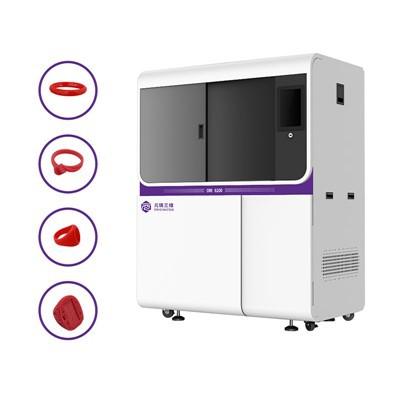
Jewelry 3D Printer If you’re interested in learning more about our standard or flexible 3D printer resins, or if you’re ready to start a procurement discussion, please don’t hesitate to reach out. Our team is here to assist you in finding the perfect resin solution for your specific requirements.
References
- Gibson, I., Rosen, D. W., & Stucker, B. (2015). Additive Manufacturing Technologies: 3D Printing, Rapid Prototyping, and Direct Digital Manufacturing. Springer.
- Wohlers, T., & Gornet, D. (2018). Wohlers Report 2018: 3D Printing and Additive Manufacturing State of the Industry. Wohlers Associates.
- Hopson, J. (2019). The Ultimate Guide to 3D Printing Resins. All3DP.
Hangzhou Originator 3D Technology Co., Ltd.
Hangzhou Originator 3D Technology Co., Ltd. is one of the most experienced 3d printer resin manufacturers and suppliers in China. With abundant experience, we warmly welcome you to wholesale high quality 3d printer resin made in China here from our factory. Contact us for more details.
Address: Room 403, Building 2, Block B, Heda Incubation Park,No. 452, 6th Avenue, Xiasha, Qiantang District,Hangzhou, Zhejiang, China
E-mail: Sales@originator3d.com
WebSite: https://www.originator3d.com/
