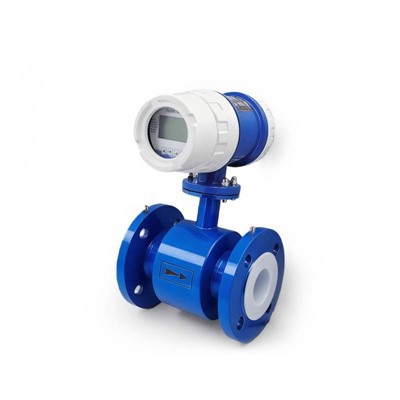
As a supplier of electromagnetic flow meters, I’ve witnessed firsthand the significance of temperature in the performance and functionality of these devices. Electromagnetic flow meters are widely used in various industries to measure the flow rate of conductive fluids. They operate based on Faraday’s law of electromagnetic induction, where a magnetic field is applied to the fluid, and the induced voltage is proportional to the flow velocity. However, temperature can have a profound impact on the operation and accuracy of electromagnetic flow meters. In this blog post, I’ll delve into the different ways temperature affects these instruments and explain how we, as a trusted supplier, can help you navigate these challenges. Electromagnetic Flow Meter
Direct Effects of Temperature on the Flow Meter Components
The components of an electromagnetic flow meter are directly affected by temperature changes. The primary parts of an electromagnetic flow meter include the sensor and the transmitter. The sensor, which is in direct contact with the fluid, contains coils that generate the magnetic field and electrodes to measure the induced voltage. High temperatures can cause the electrical properties of the coil windings to change. For instance, the resistance of the coil is temperature – dependent according to the formula (R = R_0(1+\alpha\Delta T)), where (R_0) is the initial resistance, (\alpha) is the temperature coefficient of resistance, and (\Delta T) is the change in temperature.
If the temperature of the fluid is too high, the increase in coil resistance can alter the magnetic field strength. A weaker magnetic field will result in a lower induced voltage, leading to inaccurate flow rate measurements. Moreover, the insulation materials used in the coils can degrade at high temperatures. This degradation can cause short – circuits or leakage currents, which not only affect the accuracy of the flow meter but can also damage the device over time.
On the other hand, low temperatures can make the insulation materials brittle. This brittleness can lead to cracks in the insulation, exposing the coil windings. Once exposed, the windings are at risk of corrosion and electrical interference, which can disrupt the normal operation of the magnetic field generation and voltage measurement.
The transmitter, which processes the signal from the sensor, is also sensitive to temperature. Electronic components inside the transmitter, such as resistors, capacitors, and integrated circuits, have temperature – dependent characteristics. For example, the gain of an amplifier in the transmitter can change with temperature. If the temperature is not within the specified operating range, the amplification of the sensor signal may be inaccurate, leading to incorrect flow rate readings displayed on the device.
Temperature – Induced Changes in Fluid Properties
Temperature can significantly alter the properties of the conductive fluid being measured. One of the most important fluid properties for electromagnetic flow meters is conductivity. Conductivity is the measure of a fluid’s ability to conduct an electric current and is essential for the operation of the flow meter since the induced voltage is related to the conduction of the fluid in the magnetic field.
In general, the conductivity of most conductive fluids increases with temperature. The relationship between conductivity (\sigma) and temperature (T) can be approximated by the equation (\sigma=\sigma_0(1 + \beta(T – T_0))), where (\sigma_0) is the conductivity at a reference temperature (T_0), and (\beta) is the temperature coefficient of conductivity. As the temperature rises, the increased conductivity can affect the magnitude of the induced voltage. If the flow meter is not calibrated to account for these conductivity changes, the flow rate measurement will be inaccurate.
Another fluid property affected by temperature is viscosity. Viscosity is a measure of a fluid’s resistance to flow. When the temperature of the fluid increases, the viscosity typically decreases. A lower – viscosity fluid will flow more easily through the pipeline. However, changes in viscosity can also affect the velocity profile of the fluid within the pipe. Electromagnetic flow meters assume a certain velocity profile for accurate measurements. A change in the velocity profile due to temperature – induced viscosity changes can lead to errors in flow rate measurement.
Temperature Compensation in Electromagnetic Flow Meters
To mitigate the effects of temperature on electromagnetic flow meters, temperature compensation techniques are employed. These techniques are designed to adjust the measurement readings based on the temperature of the fluid and the ambient temperature.
In some advanced electromagnetic flow meters, built – in temperature sensors are used to measure the fluid temperature. The flow meter’s internal software then uses this temperature information to correct the induced voltage measurement. For example, if the conductivity of the fluid is known to vary with temperature, the software can apply a correction factor to account for the change in conductivity, thus ensuring more accurate flow rate measurements.
We, as a supplier, offer electromagnetic flow meters with sophisticated temperature compensation algorithms. Our R & D team has developed these algorithms through extensive research and testing to ensure that our flow meters can provide accurate measurements across a wide range of temperatures. When you choose our products, you can trust that they are equipped to handle the temperature – related challenges in your application.
Long – Term Performance and Maintenance in Varying Temperatures
Temperature variations can also impact the long – term performance and maintenance requirements of electromagnetic flow meters. In applications where the fluid temperature fluctuates frequently or reaches extreme values, the mechanical and electrical components of the flow meter are subject to more stress.
The expansion and contraction of the sensor due to temperature changes can cause wear and tear on the gaskets and seals. Over time, these gaskets and seals may fail, leading to fluid leakage. Fluid leakage not only affects the accuracy of the flow measurement but can also damage the surrounding equipment and pose safety risks.
Regular maintenance is crucial to ensure the reliable operation of electromagnetic flow meters in varying temperatures. Our company provides comprehensive maintenance programs that include inspecting the components for signs of temperature – related damage, such as insulation degradation, crack formation, and seal failure. We also offer calibration services to ensure that the flow meters remain accurate even after being exposed to different temperature conditions.
Conclusion
Temperature has a multifaceted impact on electromagnetic flow meters, affecting both the components of the flow meter and the properties of the fluid being measured. Understanding these effects is essential for ensuring accurate and reliable flow rate measurements in various industrial applications.
As a leading supplier of electromagnetic flow meters, we are committed to providing you with high – quality products that are designed to withstand the challenges posed by temperature variations. Our flow meters are equipped with advanced temperature compensation features, and we offer comprehensive maintenance and support services to keep your operations running smoothly.
Pile Integrity Test Machine If you’re in the market for an electromagnetic flow meter or need to upgrade your existing system to better handle temperature effects, I encourage you to reach out to our sales team. We’ll be more than happy to discuss your specific requirements and offer you the best solutions.
References
- "Flow Measurement Handbook: Industrial Designs, Operating Principles, Performance, and Applications" by Richard W. Miller.
- "Electromagnetic Flowmeters: Theory, Design, and Application" by various authors in relevant industry research papers.
- Technical documentation provided by leading manufacturers of electromagnetic flow meters.
Dalian Yheng Technology Co., Ltd.
Dalian Yheng Technology Co., Ltd. is one of the leading electromagnetic flow meter manufacturers and suppliers in China, also supports customized service. We warmly welcome you to buy high quality electromagnetic flow meter in stock here from our factory. Contact us for more details.
Address: F1605, NO.10 Huoju road, High-tech Industrial Zone, Dalian, China
E-mail: admin@dlyheng.com
WebSite: https://www.yhengphmeter.com/
